
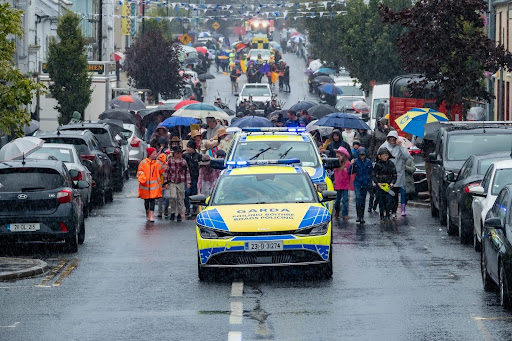
Irish public life has long been marked by gatherings: religious pilgrimages, market days, fairs, “pattern days,” parades, sports finals, concerts, and modern multi-day festivals that can temporarily turn a quiet town into a small city. Each era has had its own rhythm and its own risks, and in every era, some form of policing has been required to keep people safe.
As an Irish Garda historian, I’m interested in how these events tell a wider story about the state, society, and An Garda Síochána itself—because crowd management is never just about traffic cones and barriers. It reflects changing attitudes to public order, public morality, community relations, and, increasingly, public safety in complex, high-density environments.
Pattern Days And Early Pilgrimages: Policing Before “Event Management”
Long before we had the modern language of “stewarding,” “risk assessments,” and “multi-agency planning,” Ireland had major recurring gatherings. Pattern days—often linked to a local saint and a holy well—could include devotional elements, but also music, drink, trading, faction fighting, and disputes that spilt into the wider community.
In those earlier contexts, policing (and before the establishment of the Garda, policing by predecessor forces) tended to be reactive and visible: the point was to deter disorder through presence, intervene when violence flared, and prevent the most serious breaches of the peace. The practical realities were straightforward but difficult—limited communications, limited transport, and reliance on local knowledge.
What stands out from a historian’s perspective is how these gatherings sat at the intersection of faith, culture, and conflict. The policing challenge was not simply “crowd control,” but managing a public event that could shift from devotion to disorder within hours.
The Early Decades Of An Garda Síochána: Legitimacy, Local Relationships, And Order
With the founding of An Garda Síochána in the early years of the state, policing public gatherings carried extra weight. The Garda’s authority was still being established, and how members behaved in highly public settings mattered.
Festivals, fairs, and pilgrimages were places where the Garda could either strengthen legitimacy—through fairness, restraint, and practical help—or damage it, through heavy-handedness or perceived bias. In rural areas, especially, events were deeply local. That meant Gardaí were often dealing with people they knew, families with long histories, and tensions that pre-dated the event itself.
From “Keeping The Peace” To Planning The Event: The Rise Of Modern Public-Order Practice
By the late twentieth century, the nature of Irish events had changed. Town festivals became more commercial, major sports fixtures became larger and more security-conscious, and pilgrimages could involve huge numbers of people moving through confined spaces.
Policing began to move from a primarily reactive approach to a planning-led approach. That shift included traffic and crowd-flow planning that starts long before the day itself, defined perimeters and controlled routes, liaison with organisers and emergency services, and clearer operational roles, communication structures, and contingency planning.
The story here is not that earlier Gardaí “didn’t plan,” but that the scale and expectations of modern events required planning to become formal, documented, and coordinated across agencies.
Pilgrimages In The Modern Era: Care, Vulnerability, And The Duty To Protect
Pilgrimages remain a distinctive policing environment because they often involve vulnerable people: older participants, people with disabilities, large groups travelling together, and emotionally charged circumstances.
In these contexts, the Garda role is frequently as much about protection and support as it is about enforcement. The practical focus tends to centre on safe movement, safeguarding, preventing opportunistic crime, responding quickly to medical incidents, and maintaining calm in crowded spaces.
What has changed most over time is not the human need for pilgrimage, but the operational environment around it: modern transport, social media-driven crowd surges, and heightened public expectations of safety.
Modern Festivals: Alcohol, Drugs, Public Health, And The Night-Time Economy
Many contemporary festivals blend daytime family programming with late-night entertainment. That brings a predictable set of policing challenges: intoxication, assaults, harassment, theft, drug use, and the ripple effects on local communities—noise, litter, and pressure on services.
From a historical point of view, this is where you can see a clear evolution in Garda priorities and tactics. The aim is not simply to “make arrests,” but to prevent harm where possible through visible patrols, targeted operations, engagement with organisers, and problem-solving approaches that reduce the likelihood of serious disorder.
It also highlights the Garda’s balancing act: protecting public safety while respecting the fact that people attend festivals to celebrate, not to be treated as suspects
The Most Important Change: Multi-Agency Work And Shared Responsibility
One of the biggest differences between pattern-day policing and modern event policing is that today’s operations are rarely Garda-only. Large gatherings now involve structured cooperation across local authorities, fire services, ambulance services, private security, transport providers, and event management teams.
That change matters historically because it shifts the meaning of “policing” itself. Gardaí remain central to public safety and public order, but the modern model recognises that safe events depend on design, infrastructure, communication, and joint planning—not just enforcement.
Closing Thought: Gatherings Tell Us Who We Are, And Policing Shows How We Care For One Another
From pattern days to modern festivals, Irish gatherings have always been about community—faith, identity, celebration, and belonging. Policing these events is not just an operational challenge; it is a civic one.
When done well, it allows public life to flourish safely. When it goes wrong, the consequences can be tragic. That is why the history of Garda policing at festivals and pilgrimages is ultimately a story about Ireland itself: how we gather, how we celebrate, and how we try—across generations—to protect one another in public.
Written by Sean Daly Garda