Blog

In my blogs, I document Ireland’s police force history since 1922, revealing untold stories of courage and duty through thorough research and engaging narratives.

Uniforms, Badges, and Identity — How Garda Symbols Evolved

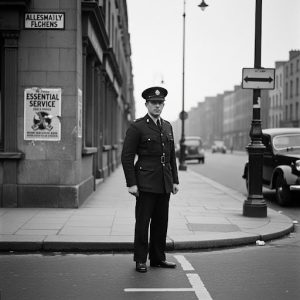
I have spent much of my life reading regulations, studying photographs, and listening to old hands recall what it meant to “look the part” in the Garda Síochána. Uniforms and badges can seem like surface details. In practice, they are the public face of authority, a promise of service, and a quiet language of belonging. Over the last century, Garda symbols have shifted alongside the organisation itself, reflecting changing politics, policing philosophies, and the everyday realities of working on Irish streets.
Read More »

A Day in the Life of a 1930s Guard – Pay, Paperwork, and Public Expectations

When we imagine the Irish Garda (as the force was often called in everyday speech in the interwar years), it is easy to picture a uniformed figure on a bicycle, a steady presence at a crossroads, or a calm voice at the counter of the local barracks. The truth, as always, was messier. A 1930s Guard was expected to be at once a peacekeeper, clerk, messenger, welfare contact, and moral representative of the State.

Read More »

Policing Irish Festivals And Pilgrimages — From Pattern Days To Modern Events

Irish public life has long been marked by gatherings: religious pilgrimages, market days, fairs, “pattern days,” parades, sports finals, concerts, and modern multi-day festivals that can temporarily turn a quiet town into a small city. Each era has had its own rhythm and its own risks, and in every era, some form of policing has been required to keep people safe.

Read More »

Garda Welfare and Mental Health – A Century of Supporting Those Who Serve

The history of the Garda Síochána is often told through the lens of public order, criminal investigation, and the daily work of policing in a changing Ireland. Less often discussed, but just as important, is the welfare of the men and women behind the badge. From the earliest years of the force to the present day, the question of mental health has moved from silence and stoicism to a growing recognition that those who serve the public must also be supported themselves.

Read More »

The Civic Guard Crisis of 1922 – The Mutiny That Almost Ended Before It Began

In the summer of 1922, the Irish Free State was still being built in the shadow of revolution, civil conflict, and state collapse. One of the most important early tests of that new political order was the Civic Guard crisis. It asked a simple but profound question: what kind of police force could replace the Royal Irish Constabulary, and could men shaped by rebellion be turned into guardians of peace?

Read More »