
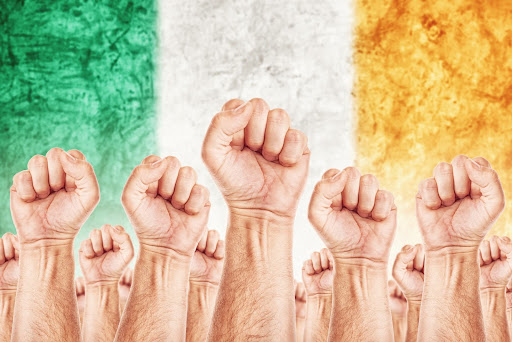
Since the Garda Síochána was founded in the early 1920s, communities have resisted it, negotiated with it, and sometimes rebuilt trust after conflict. This post looks at recurring flashpoints and what they show about legitimacy and consent.
A Note On Language: “Public Order” And “Legitimacy”
Official records often frame conflict as a “public order” issue. Community memory may frame it as a question of fairness, respect, or voice. Here, “legitimacy” means whether Garda authority is accepted as rightful and enforcement is seen as fair.
1) The Early State: A New Police Force Meets Old Grievances
The Garda was designed as a consent-based, unarmed service, distinct from the Royal Irish Constabulary. But older disputes over land, loyalties, and local power still shaped relations.
Pushback ranged from non-cooperation and public criticism to occasional violence. Trust-building often relied on local knowledge, visible presence, and keeping routine policing separate from political conflict.
2) Protest, Assembly, And The Line Between Keeping Peace And Keeping Control
Protest forces hard choices: protecting assembly while preventing intimidation, violence, or serious disruption. Disputes often come down to who gets space, when facilitation becomes enforcement, n and whether decisions are explained clearly.
Even lawful tactics can feel illegitimate when people feel managed rather than heard. Past controversies also shape how new actions are interpreted.
3) Local Flashpoints: “This Is About Us”
Local disputes can trigger sharp tensions: infrastructure projects, contentious cases, high-profile arrests, nightclub closures, or burglary waves. These conflicts often escalate when people feel unheard, enforcement seems uneven, encounters feel disrespectful, and rumours fill the gaps.
Often, the incident matters less than what it appears to confirm about how the state treats the community.
4) When Trust Breaks: Crisis, Scrutiny, And The Demand For Accountability
Allegations of misconduct, investigative failures, or poor treatment of victims can collapse trust quickly. Communities tend to demand truth, accountability, and visible change.
Independent oversight cannot create legitimacy on its own, but it can help reassure communities that failures are examined credibly.
5) The Quiet Work That Rebuilds Consent
Rebuilding is usually practical and repetitive: respectful communication, clear explanations (especially around protest), follow-through on commitments, willingness to admit mistakes, partnerships with measurable results, and everyday fairness.
Trust may remain strong with local Gardaí even when confidence in the institution is low. The goal is to make trust durable, not personal.
6) Lessons For Today: Protests Are Part Of The Garda Story, Not A Deviation From It
Pushback has helped shape policing norms, training, and accountability. It also reinforces a core point about consent: it is granted, withdrawn, and renegotiated.
People tolerate unpopular outcomes more easily than unfair treatment. Protests are not only “disorder.” They are signals about legitimacy.
Closing Thought
These episodes sit at the intersection of law, politics, and daily life. When trust is rebuilt, communities usually see authority exercised firmly when needed, and exercised fairly, with humility and transparency.
If you have local stories or archival snippets about Garda-community tensions, feel free to share them.
Written by Sean Daly, Garda