
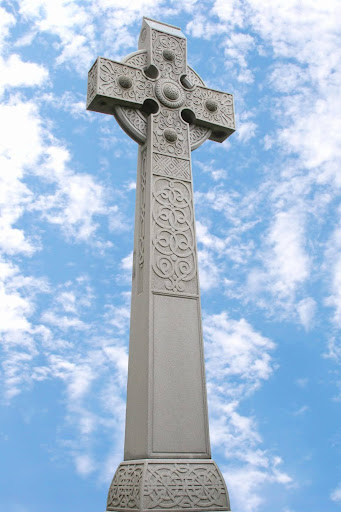
For any police service, remembrance is more than a ceremony. It is a public acknowledgement that the uniform is sometimes worn at a terrible cost, and that behind every name is a life, a family, and a community changed forever.
As an Irish Garda historian, I’m often asked where and how An Garda Síochána remembers those who died in the line of duty. This post looks at Garda memorials, acts of remembrance, and the continuing role that commemoration plays in the organisation’s culture and in wider Irish public life.
Why Remembrance Matters In The Garda Story
An Garda Síochána has always been shaped by the circumstances of the state itself—its early years, periods of political tension, and the day-to-day realities of policing. In that long history, losses in the line of duty are not just isolated tragedies; they become part of the institutional memory of the service.
Remembrance matters because it does three things at once: it honours the individual, it supports families and colleagues, and it reminds the public that policing is not an abstract service—it is carried out by people.
The Types Of Memorials You’ll Encounter
Garda memorials in Ireland typically take a few forms, each with a slightly different purpose.
1) National-level memorials
These are designed for collective remembrance—places where the entire organisation (and the state) can publicly mark the sacrifice of members who died in service. They often become focal points for annual commemorations and official ceremonies.
2) Local memorials and station plaques
Many of the most moving memorials are local: plaques in or near stations, dedications in towns and villages, or memorial stones placed in meaningful locations. These reflect the truth that a Garda’s death is felt not only by colleagues but by neighbours and communities.
3) Named spaces and living memorials
Some remembrance takes the form of a named room, garden, or space—something used and seen regularly. This can be a powerful “living memorial,” keeping a person’s memory present in everyday organisational life.
4) Rolls of honour and published remembrance
Written remembrance—rolls of honour, commemorative books, and official lists—may look simple, but they have lasting importance. They ensure that names and circumstances are not lost to time, and they provide a central point of reference for historians and family members alike.
How Garda Remembrance Is Marked
While specific ceremonies can vary by year and location, Garda remembrance usually includes a combination of the following elements.
Formal commemorations
Formal commemorations often include uniformed attendance, wreath-laying, readings or prayers, and the sounding of ceremonial signals. These rituals are not merely symbolic; they give structure to grief and provide a shared language for respect.
Community remembrance
In many cases, remembrance is community-led or community-supported—attended by local representatives, sports clubs, schools, and neighbours. This reflects something distinctive about Irish policing: the relationship between Gardai and the communities they serve is often personal.
Quiet, private remembrance
Not all remembrance is public. For families and close colleagues, anniversaries and personal visits to memorial sites may be the most significant acts of all. These moments rarely appear in official histories, but they are central to the lived experience of loss.
The Historian’s Lens: Remembrance And Record
From a historical point of view, memorials do two things. They remember, and they interpret.
A plaque may record a name and a date, but it also tells future generations what was considered worthy of remembrance, how a death was understood at the time, and how the organisation and society wanted the story to be carried forward.
That is why accuracy matters: names, ranks, dates, and circumstances should be recorded with care. For families, the details are not “archival”—they are personal. For historians, they are the foundation of honest remembrance.
Remembrance In Current Events
Remembrance is not confined to the past. When any member of An Garda Síochána is lost in the line of duty, the organisation and the public are forced to confront difficult, current questions: safety, training, operational pressures, and the risks that remain even in routine duties.
In that sense, memorials are also reminders—quiet but persistent—that behind every policy discussion are real people doing real work.
Closing Thought: “Honouring The Fallen” Is An Active Responsibility
Remembrance is not only about looking back. It is an ongoing responsibility—carried by the organisation, by colleagues, by the state, and by communities.
To honour the fallen is to speak their names correctly, to keep their stories from fading, to support those left behind, and to take seriously the lessons that line-of-duty deaths demand.
In Garda history, memorials are not the end of the story. They are the point where public memory begins.
Written by Sean Daly Garda