
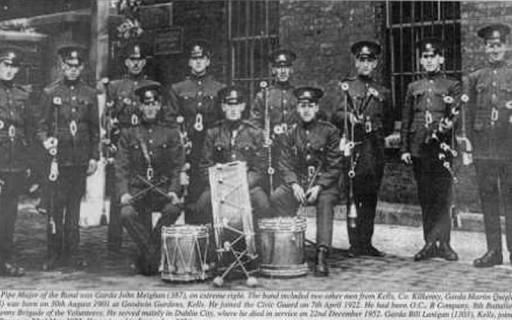
As a historian of An Garda Síochána, I’ve long been fascinated by the role that music and ceremony have played in shaping the identity and public image of Ireland’s national police service. Among the most visible and celebrated aspects of this tradition are the Garda Band and the Garda Pipe Band – two musical ensembles that have represented the force at state occasions, commemorations, and community events for generations.
Origins and Formation
The Garda Band was established in the early years of An Garda Síochána, shortly after the force’s creation in 1922. As the new Irish Free State sought to establish its own institutions distinct from the Royal Irish Constabulary that preceded it, the formation of a police band served both practical and symbolic purposes. It provided musical accompaniment for official ceremonies while also projecting an image of professionalism and civic pride.
The Garda Pipe Band followed, drawing on Ireland’s rich tradition of pipe music. The distinctive sound of the uilleann pipes and later the Highland bagpipes became synonymous with Garda ceremonial occasions, connecting the modern police force to deeper currents of Irish cultural heritage.
Role in State Ceremonial
Throughout the decades, both bands have played central roles in state occasions. From presidential inaugurations to state funerals, from commemorations of the 1916 Rising to visits by foreign dignitaries, the Garda musical ensembles have provided the soundtrack to Irish public life. Their performances at the annual wreath-laying ceremony at the Garda Memorial in Dublin’s Phoenix Park remain particularly poignant, honouring members of the force who died in service.
The bands have also represented Ireland internationally, performing at police and military tattoos across Europe and beyond, serving as cultural ambassadors for both An Garda Síochána and the nation as a whole.
Community Engagement
Beyond formal state occasions, the Garda bands have maintained a strong presence in community life. Their performances at local festivals, charity events, and school functions have helped build bridges between the Garda and the communities they serve. In an era where community policing has become increasingly emphasised, this musical outreach represents a continuation of traditions stretching back to the force’s earliest days.
Musical Excellence and Training
Membership in either band requires genuine musical ability alongside policing duties. Members typically undergo rigorous auditions and maintain high standards of performance. Many members are accomplished musicians who balance their musical commitments with their regular Garda responsibilities, rehearsing regularly and maintaining their instruments to professional standards.
The repertoire of both bands reflects their dual role: traditional Irish airs and marches sit alongside classical pieces and contemporary arrangements. This musical versatility allows them to adapt to diverse ceremonial contexts while maintaining their distinctive character.
Challenges and Continuity
Like many aspects of policing, the bands have faced challenges in recent decades. Budget constraints, changing priorities within the force, and the demands of modern policing have at times threatened their continuity. Yet they have endured, adapting to new circumstances while maintaining their core mission.
In recent years, there has been renewed recognition of the value these musical traditions bring – not just as ceremonial window-dressing, but as genuine tools for community engagement and institutional pride. The sight and sound of Garda musicians in uniform continues to evoke respect and connection in ways that transcend ordinary policing interactions.
Conclusion
The Garda Band and Pipe Band represent more than musical ensembles; they embody a tradition of service, ceremony, and community connection that has evolved alongside An Garda Síochána itself. From the uncertain early days of the Irish Free State to the complexities of 21st-century policing, these musicians have provided a thread of continuity, dignity, and cultural pride.
As we reflect on the history of An Garda Síochána, it’s worth remembering that institutions are built not just through law and policy, but through symbols, traditions, and shared experiences. The music of the Garda bands has been part of that story from the beginning, and with proper support and recognition, it will continue to resonate for generations to come.
Written by Sean Daly Garda