
Irish is not just a subject in a classroom or a sign on the roadside. It is a living part of the state’s identity, and it has always had a particular symbolic weight in the institutions founded in the early decades of independence. Few names capture that more clearly than An Garda Síochána itself: a title that carries both meaning and intention.
As an Irish Garda historian, I’m often struck by how the Irish language sits in Garda history in two ways at once. It is heritage—a deliberate expression of national identity—and it is also practical—a means of communication and public service, especially in Gaeltacht communities. This post explores both sides, from the origins of the Garda name to the realities of policing bilingually today.
Why The Garda Name Matters
The decision to name the national police service An Garda Síochána (“the Guardians of the Peace”) was not a decorative choice. In the early Irish Free State, language was intertwined with legitimacy, sovereignty, and the project of state-building. Using Irish in the title signalled a clear break from older systems and placed the organisation within a distinct Irish constitutional and cultural framework.
Even for people who do not speak Irish fluently, the name has become deeply familiar. It is one of the most visible daily reminders that Irish is embedded in public life, not confined to formal occasions.
Irish In Early Garda Culture: Symbolism, Instruction, And Identity
In the Garda’s early years, Irish was strongly associated with public service ideals and national identity. The language revival movement shaped the wider atmosphere of the period, and many state institutions reflected that emphasis.
Historically, Irish appeared in official terminology and in the public presentation of the organisation. The effect was partly practical but largely symbolic: it helped to frame the Garda as a service “of the people” in a new Irish state. For historians, this is an important reminder that policing is never only about law—it is also about how authority is expressed and understood.
Policing In Gaeltacht Areas: When Irish Is Not Symbolic
In Gaeltacht communities, Irish is not merely a heritage marker. It can be the everyday language of home, community, and identity. In such places, the ability of Gardaí to communicate through Irish can matter in very human ways: taking a statement, explaining a process, calming a situation, or supporting a vulnerable person.
From a public-service perspective, language capacity is part of accessibility. If a member of the public is most comfortable in Irish, being met in Irish can help build trust and reduce barriers—especially during stressful interactions.
Irish On Uniforms, Vehicles, And Signage: The Language In Public Space
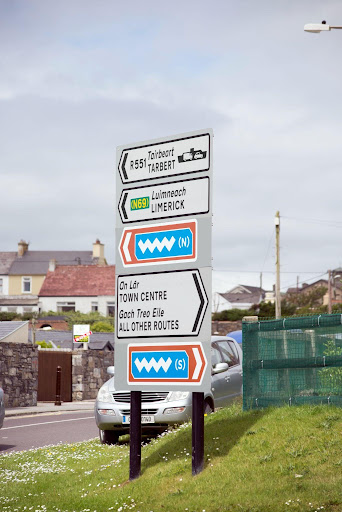
One of the most visible aspects of Irish in policing is how it appears in the public landscape. Garda branding and signage sit alongside wider state practice: bilingual road signs, official forms, and public information.
This matters more than it might seem. Language in public space communicates who a service is for, what it represents, and how the state chooses to present itself. For visitors, it signals Ireland’s distinctiveness; for communities, it can signal recognition and respect.
Irish And Public Trust: The “Soft” Power Of Being Understood
Policing depends heavily on cooperation—witnesses, victims, community information, and voluntary compliance. Language affects all of these. Even a small amount of Irish used appropriately can have a relationship-building effect, particularly in areas where Irish has cultural significance.
However, historians should be cautious about romanticising this. Language alone does not create trust. Trust is built through fairness, consistency, and lived experience. But language can be a meaningful part of that wider picture, especially when it reflects a genuine effort to serve the public well.
Irish In Modern Garda Practice: Heritage Meets Contemporary Reality
Today, An Garda Síochána operates in a complex environment: digital evidence, social media, cross-border crime, diverse communities, and modern expectations of transparency and safeguarding. In that context, Irish-language provision can seem like a small detail—until it becomes the detail that matters to a particular person in a particular moment.
Modern Irish in Garda life tends to show up in three overlapping ways:
First, as institutional heritage, embedded in the organisation’s name and public identity. Second, as a public service capability, especially in Irish-speaking communities. Third, as constitutional and cultural continuity, reflecting the state’s bilingual character.
A Respectful Future For The Irish In Policing
If the Irish language is to remain meaningful within policing, it needs to be treated as both heritage and service. That means valuing it without turning it into a token, and supporting practical use without making unrealistic demands.
For historians, the most interesting point is this: the Irish language in An Garda Síochána is not static. It changes with society, with education, with migration, and with the realities of policing. Yet the core idea behind the name—guardianship of peace, rooted in an Irish civic identity—still resonates.
Closing Thought
Irish in policing is often discussed as a symbol, but it is also a tool of care and communication. When a service can speak to people in the language they live in, it signals something simple and powerful: you are seen, and you belong.
That, in many ways, is the quiet cultural work that An Garda Síochána has carried out since its foundation—standing not only for law and order, but for the relationship between the state and the public it serves.
Written by Sean Daly Garda